
For more than two decades, digital publishing has revolved around a single metric: web traffic.
Pageviews drove editorial decisions.
Traffic reports justified advertising rates.
SEO strategies shaped newsroom priorities.
Boards and investors used traffic as a proxy for audience reach and impact.
But something fundamental has changed.
Publisher Analytics in the Post-Traffic Era
Across the media industry, publishers are watching traffic decline — in some cases dramatically — even as their journalism, audiences, and businesses continue to evolve.
Search referrals are shrinking.
Social platforms are sending fewer readers.
AI tools increasingly answer questions without sending users to websites.
For many publishers, it feels like the ground beneath the traffic economy is shifting.
But the deeper truth is this:
Traffic was never the right metric to measure the health of a media business in the first place.
The publishers thriving today aren’t the ones chasing pageviews. They’re the ones building direct relationships with their audiences and measuring something far more valuable than traffic: engagement, loyalty, and audience identity.
This shift marks the beginning of what we can call the post-traffic era of publishing.
What Are Publisher Analytics in the Post-Traffic Era?
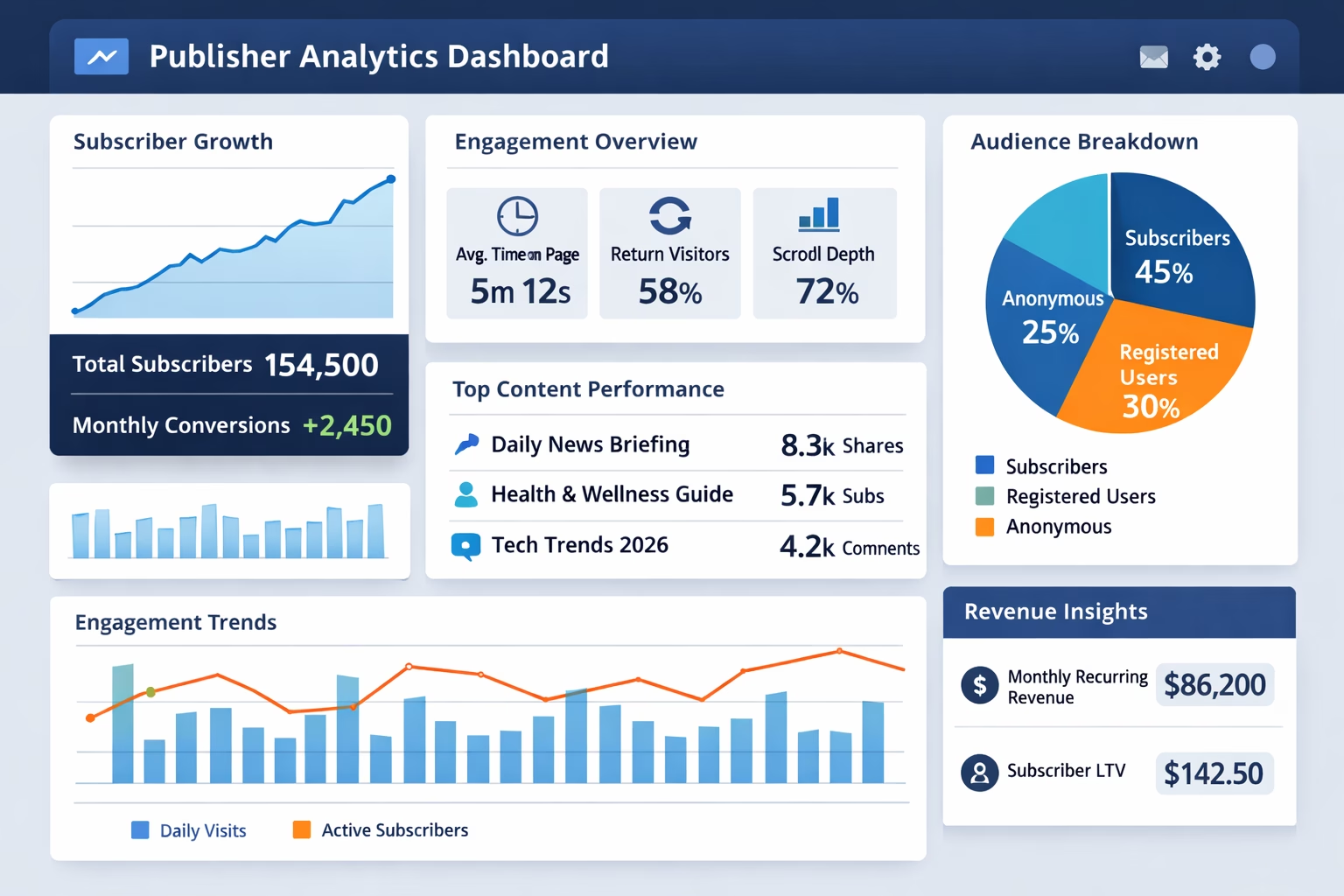
Publisher analytics refers to the systems and metrics media organizations use to measure audience behavior, engagement, and revenue performance across their digital platforms.
For many years, publisher analytics relied heavily on pageviews and web traffic as the primary indicators of success.
However, as search engines, social platforms, and AI tools increasingly deliver information without sending users to websites, those metrics no longer provide a reliable picture of audience value.
Modern publisher analytics focuses on deeper indicators of audience relationships, including:
- Audience identity (registered users, newsletter subscribers, logged-in readers)
- Engagement depth (time spent, scroll depth, article completion)
- Return frequency (how often readers come back)
- Audience loyalty (newsletter open rates, repeat visits)
- Revenue contribution (subscriptions, memberships, and reader lifetime value)
Instead of measuring how many people briefly click on an article, publisher analytics now aims to understand which readers develop long-term relationships with a publication and how those relationships drive sustainable revenue.
The Collapse of the Traffic Economy
For years, the digital publishing ecosystem depended on two distribution engines:
- Google search
- Social platforms like Facebook and Twitter
These platforms functioned as the primary gateways between readers and journalism. Publishers optimized headlines for search algorithms, built editorial calendars around trending topics, and structured entire beats around what would perform well in feeds.
Traffic became the scoreboard.
The problem was that publishers didn’t control the scoreboard.
When platforms changed how they distribute news, traffic changed with them.
In recent years, several major trends have accelerated this shift:
Platform referrals are declining
Social platforms have steadily reduced the visibility of news content. Facebook has deprioritized news in its feed, and referral traffic from platforms like X (formerly Twitter) has also declined.
For publishers who relied heavily on social traffic, the result has been a sharp drop in audience reach.
Search is evolving beyond links
Search engines are increasingly presenting answers directly within results pages.
AI-generated summaries, featured snippets, and conversational interfaces allow users to get information without clicking through to publisher websites.
Instead of:
Search → Click article → Read
The experience is becoming:
Search → AI answer → No click
For publishers whose business models relied heavily on search-driven traffic, this fundamentally changes the economics of content discovery.
Search is evolving beyond links
Automated traffic has grown rapidly in recent years as AI crawlers, scraping tools, and automated agents interact with publisher websites.
This means that a growing share of pageviews may not represent human attention at all.
If traffic increasingly reflects machine activity rather than human readership, the metric becomes even less useful as a measure of audience value.
The Real Problem: Traffic Was Always a Distribution Metric
Traffic has always been a distribution metric, not an audience metric.
It tells you how efficiently content travels across the internet, but it tells you very little about the people reading it.
Traffic cannot answer questions like:
- Who are your readers?
- Are they coming back regularly?
- Do they trust your publication?
- Are they willing to subscribe or support your journalism?
A site can generate millions of pageviews from one-time visitors who never return.
From a business perspective, those visitors may have almost no value.
By contrast, a smaller group of highly engaged readers — people who subscribe to newsletters, visit regularly, and support the publication financially — can generate the majority of a publisher’s revenue.
In other words, not all traffic is equal.
But for years, most publisher analytics systems treated every pageview the same.
The Publishers Who Are Winning
Despite the widespread narrative about declining traffic, many publishers are still growing.
The difference is that they stopped optimizing for traffic years ago.
Instead, they invested in direct audience relationships.
These publishers built distribution channels they control, such as:
- Email newsletters
- Paid subscriptions
- Membership programs
- Podcasts
- YouTube channels
- Creator-driven journalism
These channels share a crucial characteristic: they are owned distribution.
When a reader subscribes to a newsletter, the publisher can reach that audience directly without relying on algorithms or platform feeds.
That direct relationship creates a far more stable foundation for audience growth and revenue.
For example, newsletter-driven media businesses and independent journalism platforms have grown rapidly in recent years by focusing on subscriber relationships rather than traffic volume.
The shift reflects a broader industry realization:
Audience loyalty matters far more than audience size.
The Metrics That Replace Pageviews in Modern Publisher Analytics
If pageviews are no longer the most important metric for publishers, what should replace them?
The answer is a set of metrics that measure audience depth and loyalty, rather than raw traffic volume.
Modern publisher analytics increasingly focuses on four key areas.
1. Audience Identity
One of the most important shifts in digital publishing is moving from anonymous traffic to known audiences.
Instead of counting anonymous visitors, publishers are increasingly tracking:
- Registered users
- Newsletter subscribers
- Membership accounts
- Logged-in readers
Audience identity enables publishers to understand who their readers are and how they interact with content over time.
2. Engagement
Engagement metrics help publishers understand how deeply readers interact with their content.
Examples include:
- Time spent reading
- Scroll depth
- Article completion rates
- Comments or community participation
These signals reveal whether readers are genuinely consuming content rather than just clicking headlines.
3. Habit Formation
One of the strongest indicators of audience value is whether readers develop a habit of returning.
Important habit metrics include:
- Visits per reader per month
- Frequency of newsletter opens
- Cross-platform engagement
- Recurring visits to specific topic areas
Publishers that build audience habits create far more sustainable media businesses.
4. Revenue Conversion
Ultimately, the most important metrics connect audience behavior to revenue.
These include:
- Subscription conversion rates
- Membership retention
- Average revenue per reader
- Lifetime value of subscribers
Understanding these relationships allows publishers to identify which content and audience segments drive business growth.
The Data Challenge Facing Publishers
Most publishers already collect much of this data.
The problem is that it typically lives in separate systems.
For example:
- The CMS tracks article performance.
- The email platform tracks newsletter engagement.
- The subscription system tracks paying members.
- The advertising platform tracks ad revenue.
- Analytics tools track website behavior.
Because these systems are disconnected, publishers struggle to answer critical questions like:
- Which content topics drive subscription conversions?
- Which newsletters build the most loyal readers?
- Which audience segments generate the most revenue?
- Which editorial beats create long-term engagement?
Without integrating these data sources, publishers cannot see the full picture of their audience relationships.
Building the Post-Traffic Analytics Stack
At Granite Data Pro, we work with media companies that are navigating this transition.
Many publishers recognize that pageviews are no longer enough, but they lack the infrastructure needed to measure the metrics that actually matter.
Building a modern audience analytics system requires integrating multiple sources of data into a unified platform.
This typically includes data from:
- Content management systems
- Email platforms
- Subscription systems
- Advertising platforms
- Analytics tools
- Social media channels
By centralizing this data in a modern data warehouse, publishers can build analytics that measure the metrics defining the future of digital media.
Audience Data Infrastructure
The first step is creating a single source of truth for audience data.
A centralized data infrastructure allows publishers to unify information from multiple platforms and track reader behavior across channels.
This enables publishers to understand how audiences interact with their content across websites, newsletters, and other distribution channels.
Engagement-Based Analytics
Once the data infrastructure is in place, publishers can build analytics systems focused on engagement and loyalty rather than traffic.
Instead of traffic dashboards, these systems measure:
- Audience return frequency
- Content engagement depth
- Habit formation patterns
- Subscriber conversion pathways
These insights help editorial and product teams understand which content actually builds audience relationships.
Content Intelligence
Modern data infrastructure also enables publishers to analyze how different topics and editorial strategies influence audience behavior.
Publishers can identify:
- Topics that attract loyal readers
- Stories that drive newsletter subscriptions
- Content formats that convert readers into paying subscribers
This information helps publishers invest editorial resources where they create the most long-term value.
Revenue Attribution
One of the most powerful capabilities of a modern analytics stack is connecting audience engagement directly to revenue.
This allows publishers to understand:
- Which content drives subscriptions
- Which audience segments generate the most revenue
- Which distribution channels produce the most valuable readers
Instead of chasing pageviews, publishers can focus on the strategies that actually grow their business.
The Strategic Question for Publishers
The key question for publishers today is not:
How do we get our traffic back?
The more important question is:
How do we build direct relationships with our audience — and measure those relationships effectively?
The publishers that answer this question will define the next era of digital media.
Those that continue optimizing for pageviews will keep chasing a metric that no longer reflects reality.
How Granite Data Pro Helps Publishers Navigate the Post-Traffic Era
Granite Data Pro works with media companies to build the data infrastructure and analytics systems needed for modern publishing.
We help publishers:
- Build centralized audience data warehouses
- Integrate analytics across CMS, email, and subscription platforms
- Measure engagement and loyalty instead of pageviews
- Track content performance across the entire audience lifecycle
- Connect editorial strategies directly to revenue outcomes
If your organization is still relying on pageview dashboards to measure success, it may be time to rethink how your analytics stack is structured.
Book a free consultation to discuss how Granite Data Pro can help your newsroom build the next generation of audience analytics.