
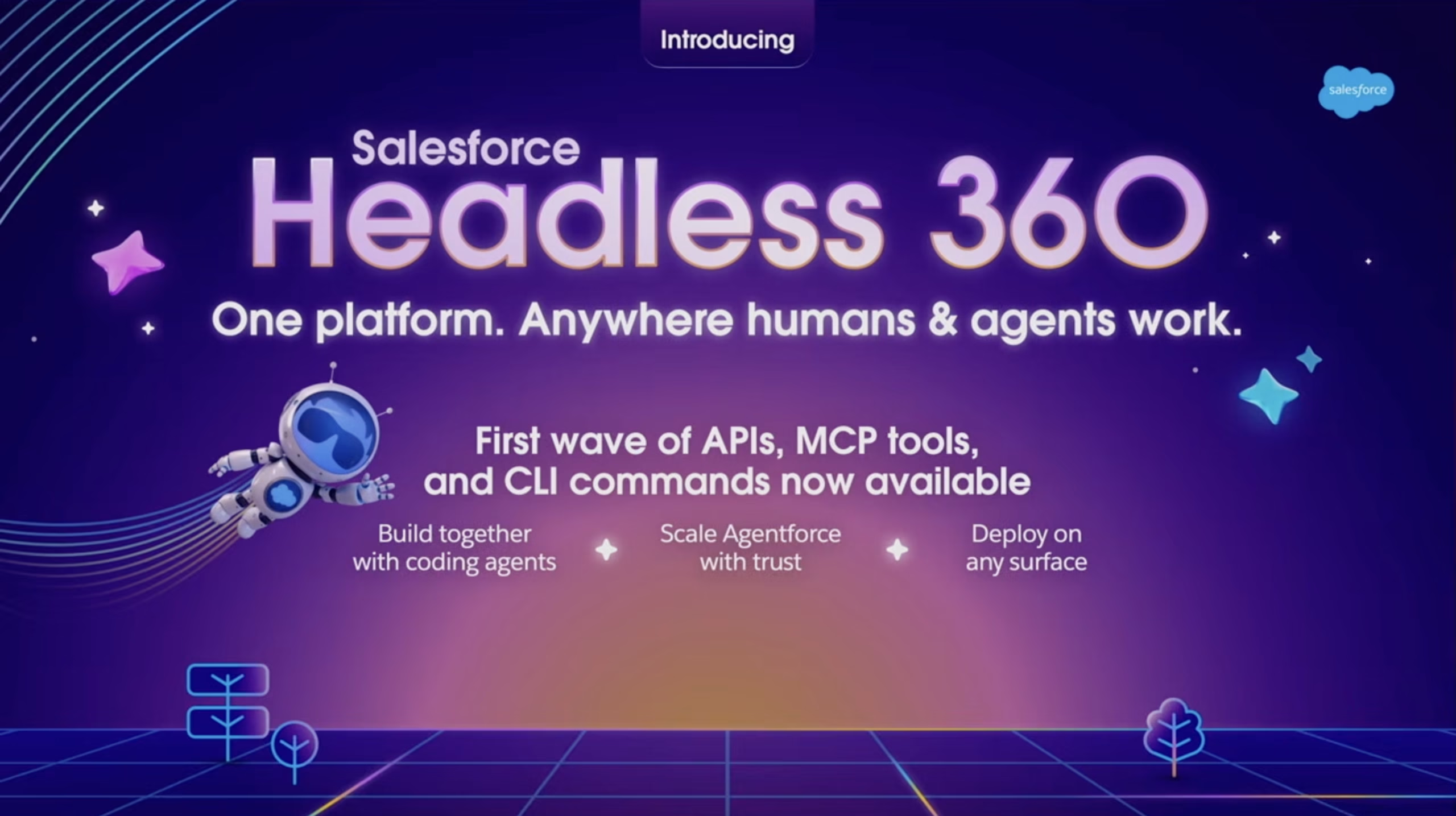
Salesforce has announced Salesforce Headless 360, a major shift in how organizations interact with its platform. In simple terms: Salesforce is repositioning itself from a browser-first business application into an API-first operating system for AI agents, developers, and modern enterprise workflows.
For companies evaluating AI adoption, automation, and digital transformation, this is a meaningful development. It signals that one of the world’s largest enterprise software companies believes the future of business systems is no longer centered around employees clicking through dashboards and forms. It is centered around software that can be accessed programmatically by agents, workflows, and external systems.
In practical terms, this means the competitive advantage may shift away from who has the most software licenses and toward who has the most connected, trustworthy, automation-ready infrastructure.
At Granite Data Pro, we pay close attention to announcements like this because they often reveal where enterprise technology is heading before most organizations fully recognize the shift. Salesforce is not just launching features here — they are validating a broader market direction we’re already seeing across publishing, ecommerce, and growth-stage businesses.
What Is Salesforce Headless 360?
Traditionally, Salesforce was used through dashboards, consoles, forms, and user interfaces. Human employees logged in, clicked buttons, updated records, and ran workflows.
Headless 360 changes the model.
According to Salesforce, core platform capabilities are now being exposed as:
- APIs
- MCP (Model Context Protocol) tools
- CLI commands
- Agent-ready services
Instead of requiring a human user to click through dashboards and menus, external systems and AI agents can increasingly interact directly with Salesforce infrastructure.
Why This Matters More Than It Sounds
Most companies still evaluate software using outdated criteria:
- How many seats do we need?
- Is the UI intuitive?
- How easy is onboarding?
- Which dashboards does it include?
Those questions still matter, but a whole lot less than they used to.
The next era of software purchasing will increasingly revolve around:
- How accessible is the system through APIs?
- Can AI agents operate safely inside it?
- Can workflows span multiple platforms?
- Can business logic be reused outside the native UI?
- Can trusted data move instantly where decisions happen?
Salesforce appears to understand that future and is repositioning accordingly.
Why the Browser Is Losing Strategic Importance
This does not mean interfaces disappear.
Humans still need dashboards, approvals, reports, and controls.
But interfaces are becoming one surface among many, not the primary operating model.
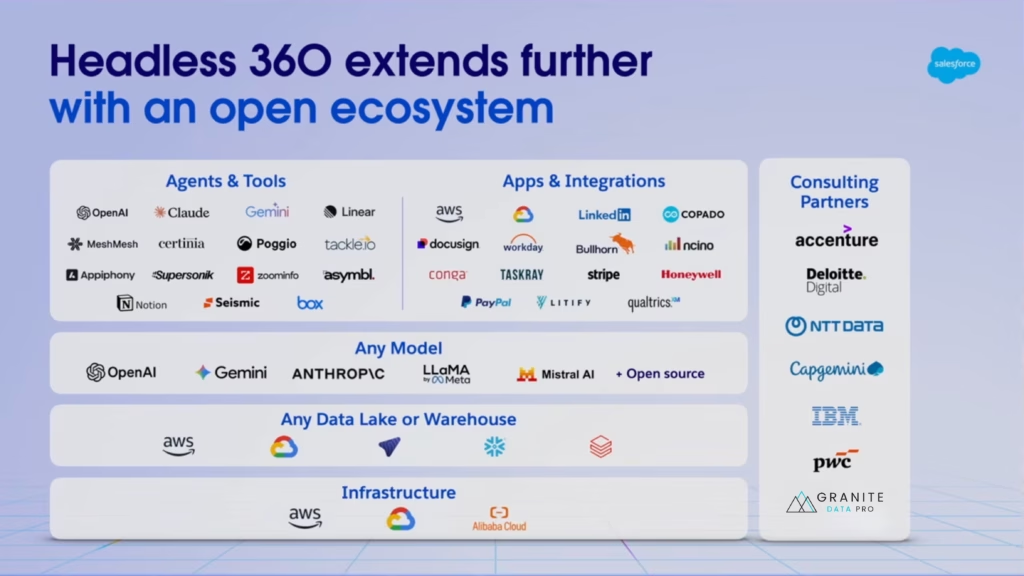
Work increasingly happens inside:
- Slack
- Microsoft Teams
- Chat interfaces
- Voice systems
- Mobile apps
- Automated workflows
- AI copilots
- Custom internal tools
Salesforce specifically highlights rendering experiences across surfaces like Slack, WhatsApp, ChatGPT, Claude, Gemini, Teams, and mobile environments.
The future winner may not be the company with the prettiest dashboard. It may be the company whose systems can operate anywhere.
What Is MCP and Why Should Leaders Care?
Salesforce references MCP tools, shorthand for Model Context Protocol.
Without getting overly technical, MCP is part of a broader movement toward giving AI systems structured, governed access to tools and business systems.
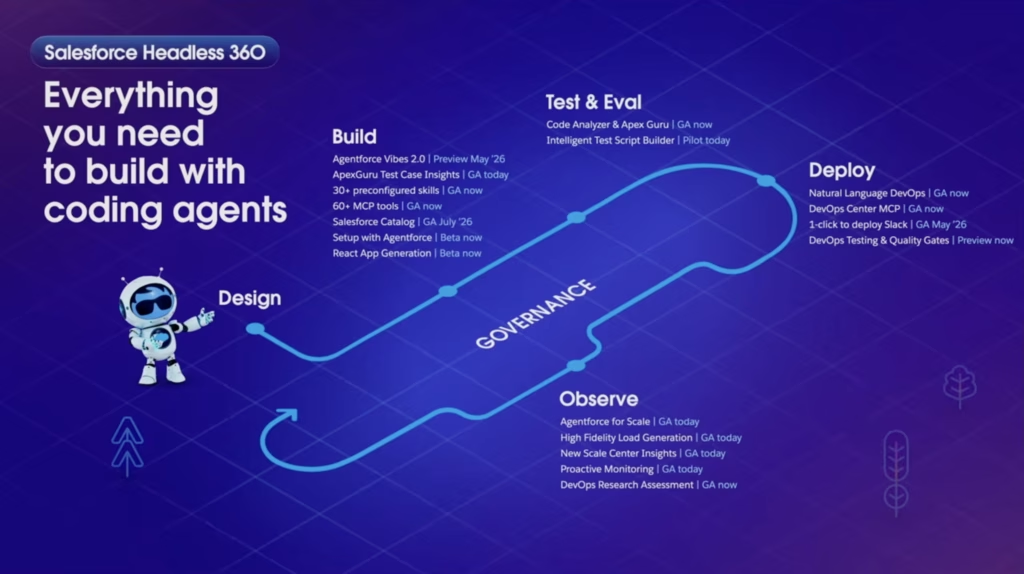
Today, many AI workflows are brittle:
- Copy/paste prompts
- Manual exports
- Spreadsheet handoffs
- Fragile Zap chains
- Shadow automations
- One-off scripts with no governance
MCP-style architectures aim to replace that with cleaner, trusted tool access.
For leadership teams, the takeaway is simple: AI becomes dramatically more useful when it can securely interact with real systems.
Not just generate text. Not just summarize notes. Actually do work.
Salesforce Is Betting on Four Critical Layers
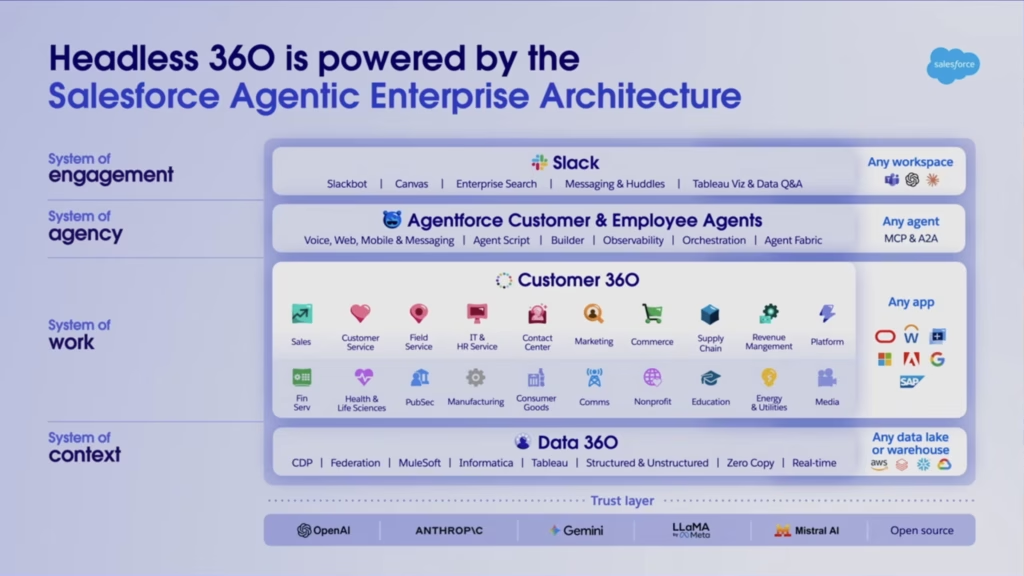
Salesforce framed its ecosystem around four connected systems:
| Layer | Product | Role |
|---|---|---|
| System of Context | Data 360 | Unified business data |
| System of Work | Customer 360 | Existing workflows and business logic |
| System of Agency | Agentforce | AI agent management |
| System of Engagement | Slack | Human + AI collaboration surface |
This is strategically smart because most AI projects fail when one or more of these layers are weak.
For example:
Great AI + Bad Data = Bad Decisions
Great AI + No Workflow Access = No Execution
Great AI + No Governance = High Risk
Great AI + No Adoption Surface = Shelfware
What We Believe at Granite Data Pro
Salesforce’s announcement supports something we tell clients often:
AI Is Not the Starting Point
Before companies deploy agents, copilots, or autonomous workflows, they need:
- Clean data flows
- Unified customer records
- Reliable integrations
- Governed permissions
- Trusted KPIs
- Clear ownership of systems
Without that foundation, “AI transformation” becomes expensive experimentation.
With the right foundation, AI becomes force multiplication.
The Real Opportunity for Mid-Market Companies
You do not need Salesforce Headless 360 to benefit from the lesson. The real takeaway applies to nearly every growing business using tools like Shopify, Klaviyo, HubSpot, Google BigQuery, Asana, Meta, and countless others.
But every growing company should ask:
Can our systems talk to each other cleanly?
Or are employees manually transferring information?
Is our reporting trusted?
Or does every meeting debate the numbers?
Can AI access useful context?
Or is data trapped in silos?
Are workflows standardized?
Or does every task depend on tribal knowledge?
Could we automate key operations safely?
Or would it create chaos?
Those answers matter more than which chatbot subscription you buy.
The Hidden Risk: AI on Top of Messy Infrastructure
Many businesses are trying to layer AI onto:
- Duplicate customer records
- Conflicting revenue definitions
- Broken attribution models
- Unreliable integrations
- Spreadsheet-driven processes
- Unowned workflows
- Missing permissions controls
Rather than creating leverage, it usually creates confusion — and fast. AI amplifies whatever system it touches.
If the underlying operation is clean, AI can create scale. If the underlying operation is messy, AI can scale the mess.
What Granite Data Pro Sees in the Market
Across publishing, ecommerce, and growth-stage businesses, we see the same pattern repeatedly:
Leadership wants AI. Operations need clarity first.
To bridge that gap, you need to solve problems with:
- Fragmented source systems
- Delayed reporting
- Inconsistent KPIs
- Missing customer identity resolution
- Manual campaign operations
- Weak integration architecture
- No single source of truth
Tackling these issues makes all the difference between AI theater and real operational gains.
How Granite Data Pro Helps Companies Adopt and Scale AI Technology
Granite Data Pro helps organizations build the systems underneath growth.
Data Infrastructure
Warehouses, pipelines, transformation layers, source-of-truth models.
Revenue Clarity
Executive dashboards, campaign measurement, attribution systems.
Workflow Automation
Cross-platform processes that reduce repetitive operational work.
AI Enablement
Trusted architecture so AI tools can operate on real business context.
Integration Strategy
Connecting platforms like Salesforce, Klaviyo, Shopify, Google BigQuery, Asana, and ad platforms into one coherent operating model.
5-Step Checklist to Become “Headless Ready”
Whether you use Salesforce or not, here is where to start:
1. Audit Your Core Systems
What tools run revenue, customer ops, and reporting?
2. Map Manual Workflows
Where are humans acting as middleware?
3. Consolidate Definitions
Agree on metrics, ownership, and naming conventions.
4. Strengthen Integrations
Use APIs and governed pipelines instead of ad hoc exports.
5. Introduce AI Last
Once context and workflows are stable, layer AI on top.
Salesforce Headless 360 is a Strategic Shift
Salesforce Headless 360 is less about product functionality and more about strategic direction.
Enterprise software is shifting from human-operated apps to programmable operating systems.
It suggests the future of enterprise software looks like:
- Less clicking
- More orchestration
- Less dashboard dependency
- More embedded intelligence
- Less isolated apps
- More connected systems
The winners in that environment will not simply be the companies adopting the most AI.
They will be the companies with the most usable infrastructure.
Need Help Modernizing the Systems Underneath Growth?
Granite Data Pro helps media brands, ecommerce companies, and operationally complex teams build clean infrastructure that turns AI into measurable leverage.
Schedule a conversation.